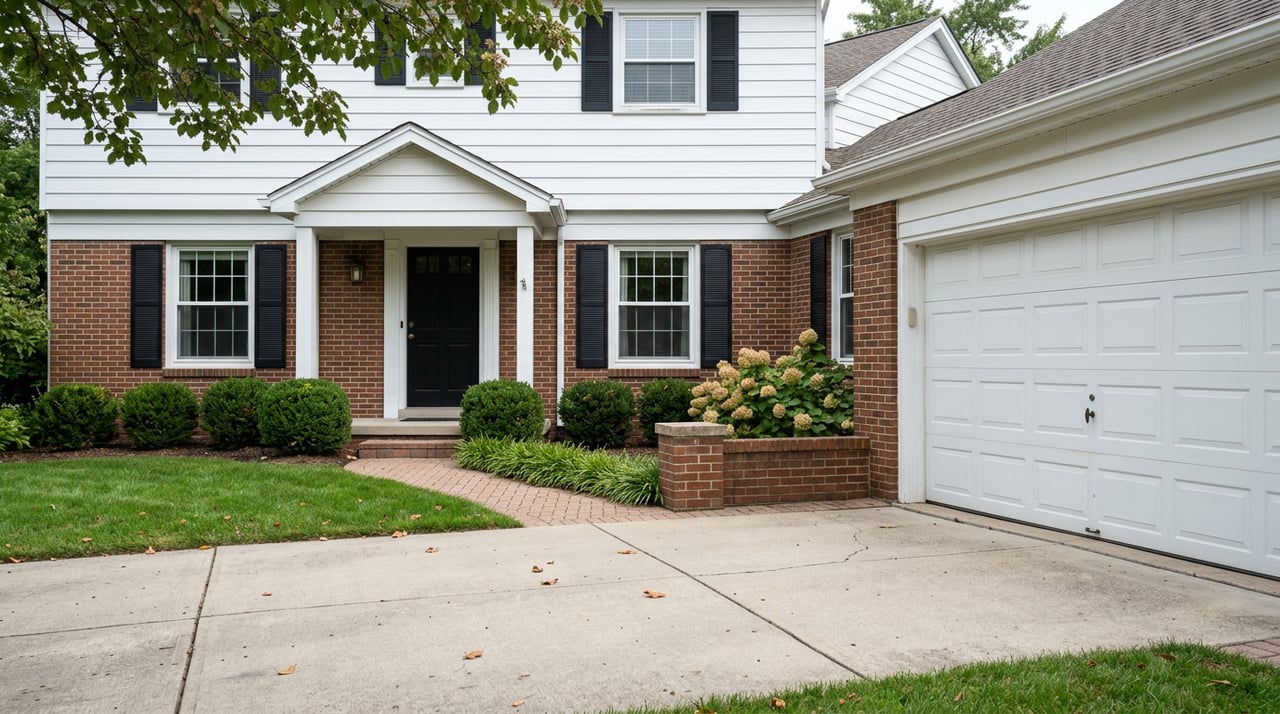
A Reston seller orders the Reston Association resale disclosure packet the week they list. Everything looks routine: the exterior inspection comes back clean, the packet arrives inside the association's 14-day window, and the file goes into the closing binder without a second thought. Then the first contract falls apart over financing. A new buyer signs six weeks later. By the time that second deal is ready to close, more than 90 days have passed since the original packet was issued, and the Reston Association's resale certificate has quietly expired. The exterior inspection has to be redone before anyone can settle.
Nothing in that sequence is unusual. It is simply how Reston's resale process works, and it is the kind of detail that never shows up on a listing sheet. The assessment amount printed on a portal, the HOA fee a lender's worksheet assumes, the number a friend who sold three years ago remembers: none of them tell you whether the paperwork behind that number is still valid on the day you're scheduled to close.
That is the real story behind Reston's homeowner association costs this year. The dollar figure gets most of the attention, but the figure is the least volatile part of the process. What actually catches people off guard is timing, layering, and a fee structure that looks like one number and behaves like three.
The assessment moved twice before it became final
Reston Association's board did not simply set the 2026 annual assessment and move on. In late August 2025, the association's CFO presented a draft budget that proposed raising the assessment to $923, an 8.8 percent jump from the 2025 rate of $848, framed as the start of a multi-year push to fund capital projects. By the board's November 13 meeting, that number had come down. The board voted 7-2 to adopt a final 2026 assessment of $890, a 5 percent increase over 2025, after trimming pool operating hours and other line items to soften the increase.
If you were pricing out carrying costs on a Reston home anytime between late summer and mid-November 2025, the number you found depended entirely on when you looked. A draft in early fall would have shown something higher than what members actually owe today. The assessment is due January 1 each year, with late fees kicking in after March 1, and reduced rates are available for owners enrolled in the Fairfax County Tax Relief Program.
The lesson isn't that $890 is somehow unstable. It's that the number is set through a public budget process every fall, which means anyone comparing homes based on an HOA figure pulled from an old listing, a stale spreadsheet, or secondhand memory should confirm the current figure before building it into an offer or a net sheet.
One fee or three, depending which Reston you're in
Reston Association covers the community's shared amenities: trails, pools, lakes, and the Design Review Board that enforces exterior standards. But Reston Association is not the only association most homeowners belong to. The community includes more than 160 sub-associations, so a given property might carry only the RA assessment, or that assessment stacked on top of a separate cluster or condominium fee.
That stacking changes the math more than people expect. Take a cluster charging $1,880 a year on top of the $890 RA assessment. Run both through twelve months and you get roughly $74 a month from Reston Association and another $157 from the cluster, for a combined carrying cost near $231 a month before any condominium fee that might apply on top of that. Two homes listed at the same price, in the same part of Reston, can carry meaningfully different monthly obligations depending on which cluster they sit in and whether that cluster is separate from RA membership or layered underneath it.
This is exactly why the listing price alone doesn't tell the full story, and why pulling the actual disclosure packet, not just the RA packet, matters before anyone signs a contract.
The transfer fee, and the one window to get it back
Every purchaser in Reston pays a transfer fee at settlement, set at $374 for 2026. It funds general association expenditures at the board's discretion. What most buyers don't know is that there's a narrow path to recover it: if you owned and occupied another lot in Reston, sold it to buy the new one, and don't own any other lot in the community, you can apply for a credit equal to that year's transfer fee within 12 months of settlement. Miss the 12-month window and the credit request won't be considered, no exceptions noted in the association's own materials. For anyone trading up within Reston rather than moving in from outside it, that's a fee worth flagging early rather than discovering after the deadline has passed.
The packet has its own deadline, separate from the price
This brings the story back to where it started. Virginia's Property Owners' Association Act requires sellers in a common interest community to provide a resale disclosure packet, and in Reston that packet has to come from Reston Association and, if applicable, from the cluster or condo association too. Only the owner or an authorized agent can request it. By law, Reston Association has 14 days from payment to deliver it, and there's no option to pay for expedited service.
The packet includes more than paperwork. It includes the results of an exterior inspection of the property, and if that inspection turns up a design or maintenance violation, the violation doesn't block the sale. Unresolved issues simply become the new owner's responsibility at closing. That's precisely why agents who work Reston regularly recommend securing what the association calls a Close Letter, confirming any noted violations have been corrected, before settlement rather than leaving it as a surprise for the buyer to inherit.
And then there's the clock that started this whole piece: a standard resale disclosure certificate is valid for the year it's issued, but if settlement happens more than 90 days after the original package was released, the resale inspection is no longer considered current. A new inspection, and often an updated package, has to be ordered before closing can proceed. On a deal that moves smoothly from contract to settlement in 45 or 60 days, this never comes up. On a deal that stalls, falls through and restarts, or simply runs long because of financing or repair negotiations, it can turn into a closing delay nobody budgeted for.
What this means if you're listing or under contract this fall
A few habits make the difference between treating this as background paperwork and treating it as a real part of the timeline:
- Order the resale disclosure packet as soon as a home is under contract, not the week before closing, since the standard 14-day delivery window alone can eat into a tight schedule.
- If the property sits inside a cluster or condo association, request that packet at the same time. Reston Association's packet only covers Reston Association.
- Track the 90-day clock from the day the packet is issued. If a deal is likely to run long, plan for the possibility of a follow-up inspection rather than being caught by it at the settlement table.
- Ask for a Close Letter before settlement if the exterior inspection noted anything, so the seller resolves it rather than passing it to the buyer as an inherited violation.
- Confirm the current-year assessment amount directly, since the figure resets every fall and a number pulled from an earlier draft or an old listing may already be out of date.
None of these steps are complicated on their own. Together, they're the difference between a Reston closing that goes exactly on schedule and one that quietly slips because a piece of paperwork expired while everyone was focused on the number at the top of the listing.
A few questions we hear often
Does an unresolved Design Review Board violation stop a sale from closing? No. Reston Association's own materials are clear that uncured violations don't prevent title transfer. They become the new owner's responsibility, which is why sellers are encouraged to resolve them and get a Close Letter beforehand.
What if my home is in a cluster that doesn't have its packet ready in time? Reach out to the cluster or condo association directly, since each one manages its own disclosure documents on its own timeline, separate from Reston Association's process.
Is the RA transfer fee the same as the annual assessment? No. The annual assessment is a recurring yearly fee paid by every member. The transfer fee is a one-time charge of $374 for 2026, paid once at settlement when a property changes hands.
If you're weighing a sale or an offer in Reston this fall, the paperwork mechanics above are exactly the kind of detail we build into every listing timeline and every buyer's offer strategy. If you'd like a clearer picture of what your specific property or target home actually carries once every layer of fee and deadline is accounted for, Marnie Schaar & Associates is happy to walk through it with you. Request a complimentary home valuation and we'll start with the numbers that actually apply to your address, not the ones sitting on an old listing.