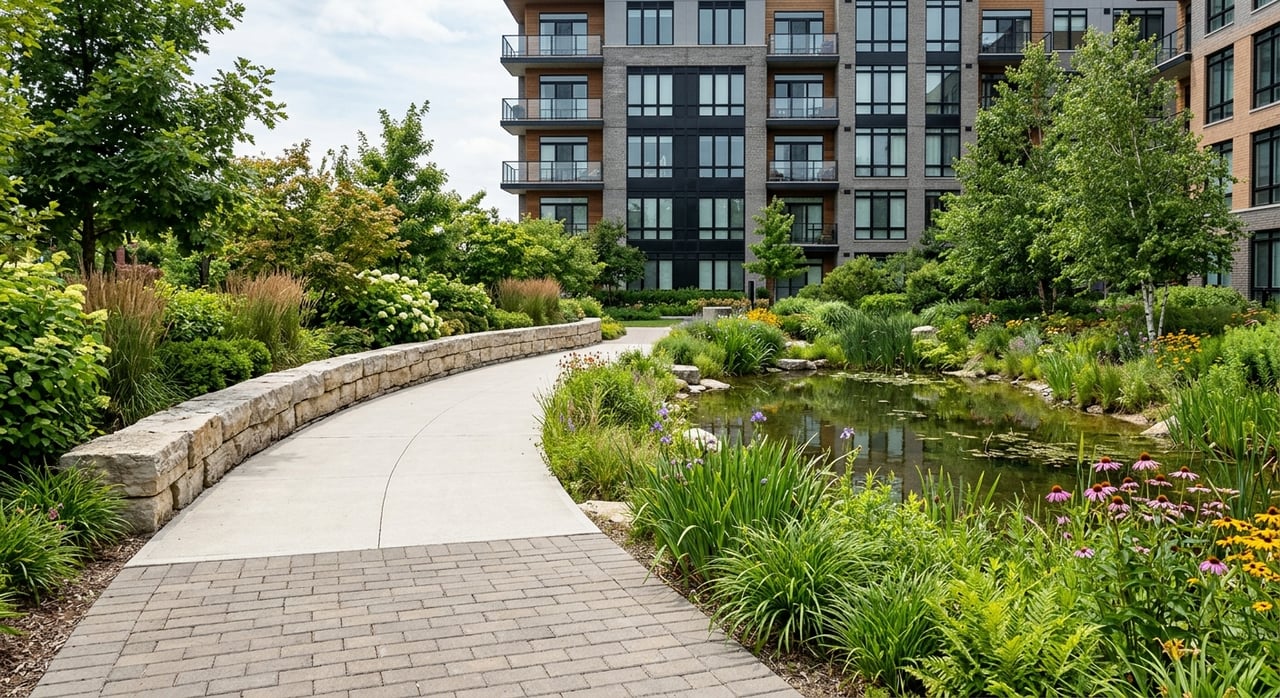
Are you looking for a place where getting outside is part of everyday life, not just a weekend plan? In Reston, that idea runs through the way the community was designed, from its lakes and wooded pathways to its mix of home styles and village centers. If you are exploring a move, comparing neighborhoods, or thinking about what kind of lifestyle fits you best, this guide will help you see how outdoor living and housing choices come together in Reston. Let’s dive in.
Why outdoor living feels different in Reston
Reston was planned with nature, leisure, and pedestrian access in mind from the beginning. Fairfax County describes a community design that preserved natural areas, created usable open space, and kept trees, stream valleys, and vegetation woven into daily life.
That planning vision still shapes how Reston feels today. Reston Association describes more than 1,350 acres of open space and 55 miles of pathways connecting neighborhoods, schools, and shopping, along with forests, meadows, wetlands, lakes, ponds, and streams.
That means outdoor living in Reston is not limited to a few parks on a map. It is built into the layout of the community itself, which is a big part of why the area appeals to buyers who want both convenience and access to nature.
Trails that support daily routines
For many buyers, trails matter most when they fit into real life. In Reston, the pathway network can support a morning walk, an after-dinner bike ride, or a car-light trip between neighborhoods and local services.
One major regional feature is the Washington & Old Dominion Trail. NOVA Parks describes it as a 45-mile paved trail, and Reston is one of its access points.
Fairfax County’s NOVA Loop guide notes that the Reston segment begins just north of Sunset Hills Road and connects users toward Reston Town Center and Lake Fairfax. If you want a home base with access to both local paths and a larger regional trail, that is an important part of the Reston lifestyle story.
Reston pathways and neighborhood access
The local pathway system is what often makes the biggest difference day to day. Reston Association says those 55 miles of pathways connect neighborhoods, schools, and shopping, which supports a more connected, walkable feel in many parts of the community.
This is especially helpful if you value a lifestyle where outdoor time can happen naturally between errands and routines. Instead of driving to every activity, you may find that paths and green connections are already part of the neighborhood fabric.
Quiet nature spaces close to home
Not every outdoor moment needs to be active or high energy. Walker Nature Center offers a quieter side of Reston, with 72 acres of woodlands, one mile of loop trails, and environmental education resources.
Reston Association calls it the heart of Reston’s open space. For buyers who want wooded surroundings and peaceful places to recharge, this part of the community adds another layer to what outdoor living can mean here.
Lakes that shape the Reston lifestyle
Reston’s four man-made lakes are some of its most recognizable outdoor features. Lake Anne, Lake Thoreau, Lake Audubon, and Lake Newport cover 125 acres in total and support fishing, boating, wildlife watching, and lakeside picnicking.
Many sections of the pathway network run near these lakes, which helps blend water views into everyday routines. You may not live directly on a lake to enjoy the effect of these spaces on the feel of the community.
It is also important to know the practical side. Reston Association states that swimming is prohibited in the lakes and ponds, so the lifestyle here is more about scenery, boating, observing wildlife, and spending time along the shoreline.
Lake Anne and the original village-center idea
Lake Anne is especially important because it reflects Reston’s original planning vision. Fairfax County identifies village centers as neighborhood gathering places meant to include plazas, grocery stores, community uses, restaurants, childcare, and local services.
Lake Anne is the clearest example of that model. It combines a lakeside setting with a pedestrian-oriented layout, and the surrounding area is designated by Fairfax County as a historic overlay district.
For buyers, that can translate into a very specific kind of appeal. You get a setting where outdoor space, village character, and a mix of uses work together in a way that feels intentional.
Parks that expand your options
While Reston’s internal network is a major draw, larger public park spaces add even more variety. Lake Fairfax Park is a strong example of that broader outdoor access.
Fairfax County describes Lake Fairfax Park as a 476-acre park with a 20-acre lake, boat rentals, campgrounds, hiking and biking trails, a skate park, athletic fields, and the Water Mine family water park. That mix gives residents access to both low-key outdoor time and larger recreational amenities.
For homebuyers, this matters because it widens what “near outdoor amenities” can mean. In Reston, you are often looking at a combination of neighborhood paths, scenic lakes, and major park destinations rather than just one feature.
Home styles that match different lifestyles
One of Reston’s biggest strengths is housing variety. Fairfax County and the Reston @ 50 planning exhibit both point to a mix that includes single-family detached homes, townhouse clusters, and multifamily communities.
That range gives buyers more ways to match a home to the life they want to live. Some people prioritize lake access and walkability, while others want more privacy, wooded surroundings, or a location near shopping and transit.
Reston’s housing story is not one-size-fits-all. It is a community where outdoor settings and home types often intersect in useful, practical ways.
Townhouses and clustered neighborhoods
Townhouse living is part of Reston’s original design language. The planning record highlights examples such as modern flat-roof townhouses near Lake Anne, the colorful Waterview townhouses, and geometric Hickory Cluster townhouses in wooded settings.
Clustered neighborhood planning is also important here. Fairfax County says many of Reston’s residential areas were designed with thick vegetation buffering land uses and streets, which supports a greener feel and helps preserve natural areas.
If you are drawn to a home that feels tucked into trees while still connected to trails and services, this is one of Reston’s defining patterns. In many cases, the appeal is less about isolated suburban sprawl and more about homes woven into preserved greenbelts and stream-valley settings.
Multifamily and lakeside convenience
Reston also offers multifamily living tied closely to outdoor amenities. South Lakes Village Center sits along Lake Thoreau and includes low-rise multifamily units, mid-rise multifamily units reserved for seniors, and neighborhood-serving retail with direct access to the lake.
North Point Village Center includes low-rise multifamily units, some affordable housing, and neighborhood retail. These areas show how Reston blends housing variety with walkable access to daily needs and outdoor settings.
For some buyers, that combination can be the sweet spot. You may get lower-maintenance living while staying close to pathways, village-center services, and scenic open space.
Reston Town Center and the mixed-use core
If your version of outdoor living includes plazas, strolling to dinner, and spending time in an active mixed-use setting, Reston Town Center may stand out. Since its origin in 1990, it has grown into an outdoor venue with more than 50 retailers, 35 restaurants, a multi-screen cinema, and a seasonal outdoor ice rink.
The Silver Line Metro connection was added in 2022, which further strengthened the area’s role as Reston’s mixed-use core. Fairfax County’s planning for Reston Town Center North also points to a walkable transition area with a central green, expanded library, and workforce housing.
This part of Reston offers a different outdoor experience than the lakes or wooded clusters. It is less about quiet natural immersion and more about walkable urban convenience in an open-air setting.
Which parts of Reston feel most walkable?
If walkability is high on your list, several areas deserve attention. Based on Fairfax County’s village-center guidance and Reston Association’s pathway network, Lake Anne, South Lakes, North Point, Reston Town Center, and trail-connected corridors offer some of the strongest walkability stories.
These areas were designed around local services, gathering spaces, and pedestrian connections. That does not mean every block feels the same, but it does mean many buyers can find a version of walkability that fits their priorities.
Some people want to walk to coffee shops, dining, and retail. Others care more about walking to paths, lakes, or open space. Reston offers both, often within the same broader community.
What buyers should keep in mind
As you compare neighborhoods and home styles, it helps to think beyond square footage alone. In Reston, the setting around the home can shape your lifestyle just as much as the floor plan.
A townhouse near Lake Anne may support a very different routine than a detached home in a trail-connected residential pocket. A multifamily home near South Lakes or Reston Town Center may offer easier access to retail, paths, and gathering spaces, while a clustered home in a wooded area may feel more private and tucked away.
It is also helpful to keep the market context in mind. Census QuickFacts reports a 60.6% owner-occupied housing unit rate in Reston, a median owner-occupied home value of $642,000, a median gross rent of $2,231, and a median household income of $148,710.
Those numbers do not tell the whole story, but they help frame Reston as a market where lifestyle, planning, and housing variety all play a meaningful role in buyer decisions.
Finding the right outdoor-living fit
The best way to approach Reston is to think in lifestyle patterns. Do you picture lake views and village-center charm, a walkable mixed-use environment, or a quieter home base connected to trails and trees?
That is what makes Reston so compelling. From the start, it was planned as a place where open space, housing choice, and daily convenience would work together.
If you want help sorting through those options, local guidance can make the search much clearer. Whether you are buying your first home, relocating, or preparing to sell and move within the area, Marnie Schaar & Associates can help you match the right home to the way you want to live.
FAQs
What makes outdoor living in Reston different from other Northern Virginia communities?
- Reston was planned around open space, pathways, housing variety, and pedestrian access, with more than 1,350 acres of open space and 55 miles of pathways connecting neighborhoods, schools, and shopping.
Are the lakes in Reston open for swimming?
- No. Reston Association says swimming is prohibited in Reston’s lakes and ponds, though the lakes are used for boating, fishing, wildlife watching, and picnicking.
What types of homes can you find in Reston?
- Reston includes single-family detached homes, townhouse clusters, low-rise and mid-rise multifamily communities, and higher-density residential options near Reston Town Center.
Which Reston areas offer strong walkability?
- Lake Anne, South Lakes, North Point, Reston Town Center, and trail-connected corridors stand out because they combine pathways, local services, and village-center planning.
What is the village-center concept in Reston?
- Fairfax County describes village centers as neighborhood gathering places planned with plazas, grocery stores, community uses, restaurants, childcare, and local services, with Lake Anne as the clearest original example.
How does Lake Fairfax Park add to outdoor living in Reston?
- Lake Fairfax Park adds a large county park with a 20-acre lake, boat rentals, campgrounds, trails, athletic fields, a skate park, and the Water Mine family water park.